


SXE Edge Platform (Rehab)
SXE Edge Platform (Rehab)
Couldn't load pickup availability
By design SXE is a gentle, no‑hang training platform designed for climbers dealing with pulley injuries, finger tweaks, and chronic irritation. Built on our Unlevel Edge and 24mm Dual Edge design, it uses a soft, comfortable grip that conforms with pressure to the surface that spreads load across the finger pads, reducing sharp pressure points and improving comfort compared to standard hard edges for those sensitive fingers.
SXE is made for controlled, sub‑max loading in a no‑hang format:
- Light finger engagement, static positions, and slow finger curls or isometric contractions against partial bodyweight.
- Interchangable Unlevel Edge and standard Flat Edge blocks.
- The unlevel grip surface encourages varied finger positions and subtle load shifts, helping restore tolerance without overloading sensitive or healing tissues.
- A no hang block to for transitioning from injury back to full strength.
- Takes 45lbs of lifting force to compress the edge to 50% deflection, and 100lbs to reach 90% compression.
- Provides tactile feedback to the fingers when engaging.
The rounded geometry and forgiving material help ease fingers back into flexion and gripping positions commonly stressed, while still providing a clear edge profile for precise, repeatable hand placement.
The SXE line fills the gap between doing nothing and going too hard, giving injured climbers a dedicated tool for rebuilding confidence and capacity in their fingers.
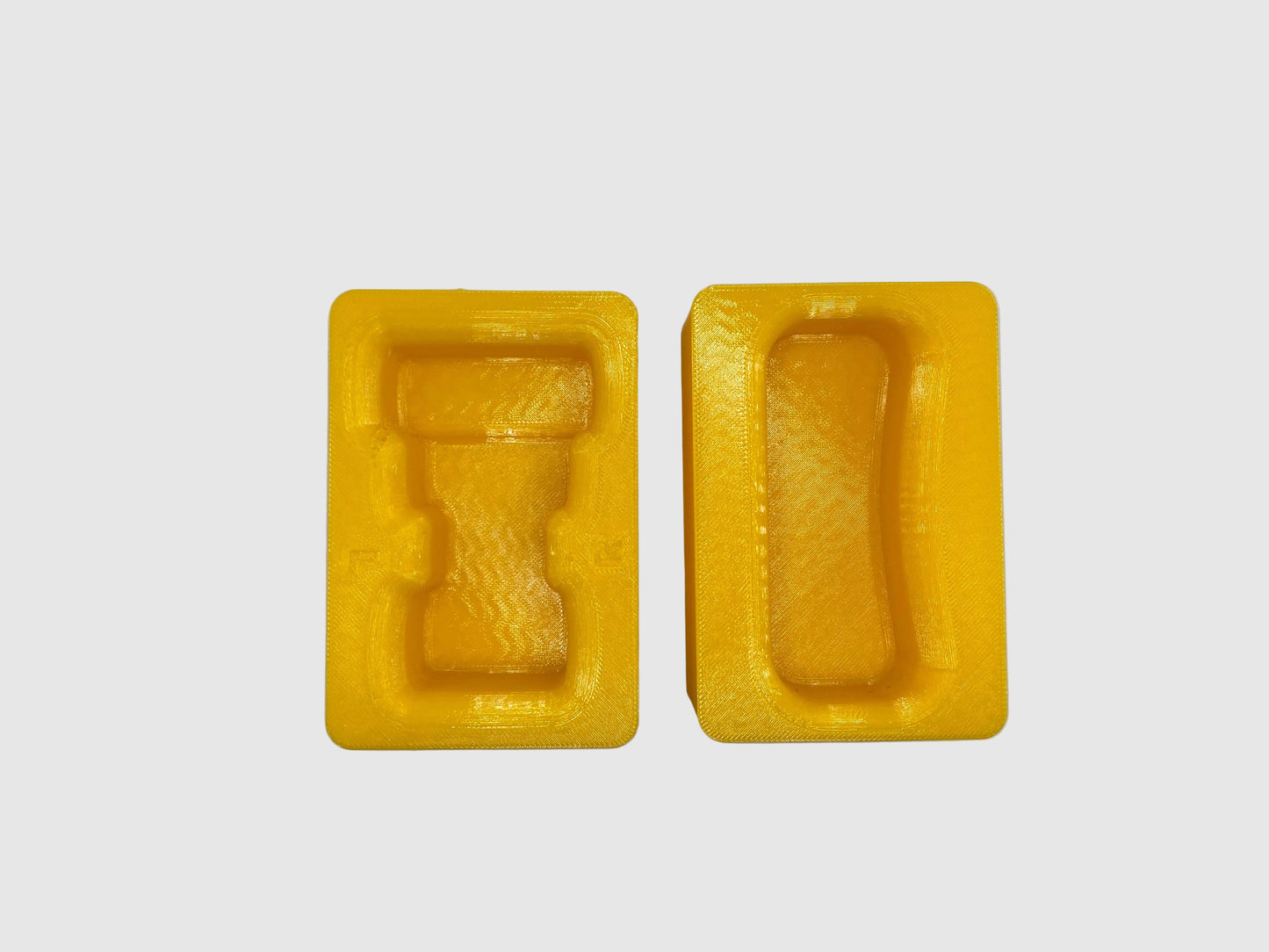
The platform includes SXE base platform, unlevel soft edge block, dual soft edge block.
* Please consult with a climbing specific PT or hand specialist before engaging with rehab protocol.


FAQs
Can I use it for pulley or A2 injuries?
Yes, it can be used as a gentle loading tool during recovery from pulley (including A2) injuries, but whether it is appropriate for your specific injury, timing, and loading should be determined by a climbing specific PT or rehab specialist.
What does it feel like?
It feels like a firm surface that gently “gives” under your fingers instead of your finger tissue adjusting into a hard surface.
As you add load the edge it firms up progressively, so light weights feels solid like a normal edge, while higher loads feel more cushioned and forgiving than a standard hard edge.
Can I use it even if I’m not currently injured?
Yes, you can use it even if you are not injured. Sub‑maximal finger loading and no‑hang style training are widely used by to build strength, promote tendon adaptation, and support long‑term finger health.
You can also use this to perform isometric finger curls.
How often should I train with the SXE?
For injury rehab, a good starting point is 2–3 very short, low‑intensity sessions per week, and to reduce or skip sessions if symptoms flare or your overall finger load is already high.
Always defer final decisions on frequency and progression to a climbing specific PT or rehab specialist who understands your specific injury and training load.
What does it mean that it compresses at 45 lb and 100 lb?
Those numbers describe how firm or soft edge is when you load it.
- From 0lbs to 30lbs of lifting force the edge remains firm and similar to any other edge.
- Above 30lbs the edge surface will begin to deform.
- Around 45lbs of lifting force will deform the grip to about half its height (50% compression).
- Around 100lbs will bring it to roughly 90% compression, meaning it feels much firmer and “maxed out” at that point.
- Height change is minimal to 6mm at max.
What signs indicate I might be overloading my fingers?
Common signs of overloading include sharp or escalating pain during loading, pain that lingers or worsens later that day or the next morning, or swelling and tenderness around the finger joints or pulleys.
You may also notice reduced grip strength on holds that normally feel easy, or a sense that your fingers feel unusually “stressed” or irritated compared to your usual training response. If any of these show up, back off intensity or frequency and discuss next steps with a climbing specific PT or rehab specialist.
How do I transition from the SXE back to full hangboard training?
Transition should be slow and pain‑guided, starting with easy open‑hand hangs and only progressing if symptoms stay calm.
A simple approach is to gradually replace some SXE sessions with light, controlled hangboard work (larger, more comfortable edges, sub‑max loads, and short sets), then build toward your normal hangboard protocol under the guidance of a climbing specific PT or rehab specialist.
How does it help reduce finger pain or irritation?
The SXE helps by letting you load your fingers more gently and evenly than on a hard edge, which can reduce sharp pressure points that often irritate sensitive tissue.
It's soft, deformable surface and sub‑max, no‑hang format support low‑intensity isometrics and curls that encourage tissue adaptation and blood flow without the same peak forces seen in maximal hangs.
Can it replace medical or PT‑guided rehab tools?
No. The SXE is a training and rehab tool, not a replacement for evaluation, diagnosis, or a structured rehab plan from a climbing specific PT or rehab specialist.
It is best used as one component within a broader, individualized program that a clinician designs for your specific injury, stage of healing, and overall climbing goals.

Stage 1 — 0 to 30lbs
Standard Ground Lifts
Use it as a gentle ground‑lift tool for light engagement, tissue exposure, and post injury confidence building.

Stage 2 — 30 to 90lbs
Isometrics or Ground Lifts
Pair text with an image to focus on your chosen product, collection, or blog post. Add details on availability, style, or even provide a review.

Stage 3 — above 90lbs
Return to Normal Edge/Hang
Transition back toward a standard, non‑compressible edge for more traditional finger strength protocols, guided by a climbing specific PT or rehab specialist if you are returning from injury.