Frequently Asked Questions
Why should I train wrist pronation for climbing? +
Strong pronation/supination muscles improve wrist stability on slopers, reduce friction demands on low-angle holds, and help prevent medial/lateral elbow strain by balancing forearm muscle development. Many climbers notice better control on sketchy slopers after 4-6 weeks of consistent work.
How do I use a wrist pronator correctly? +
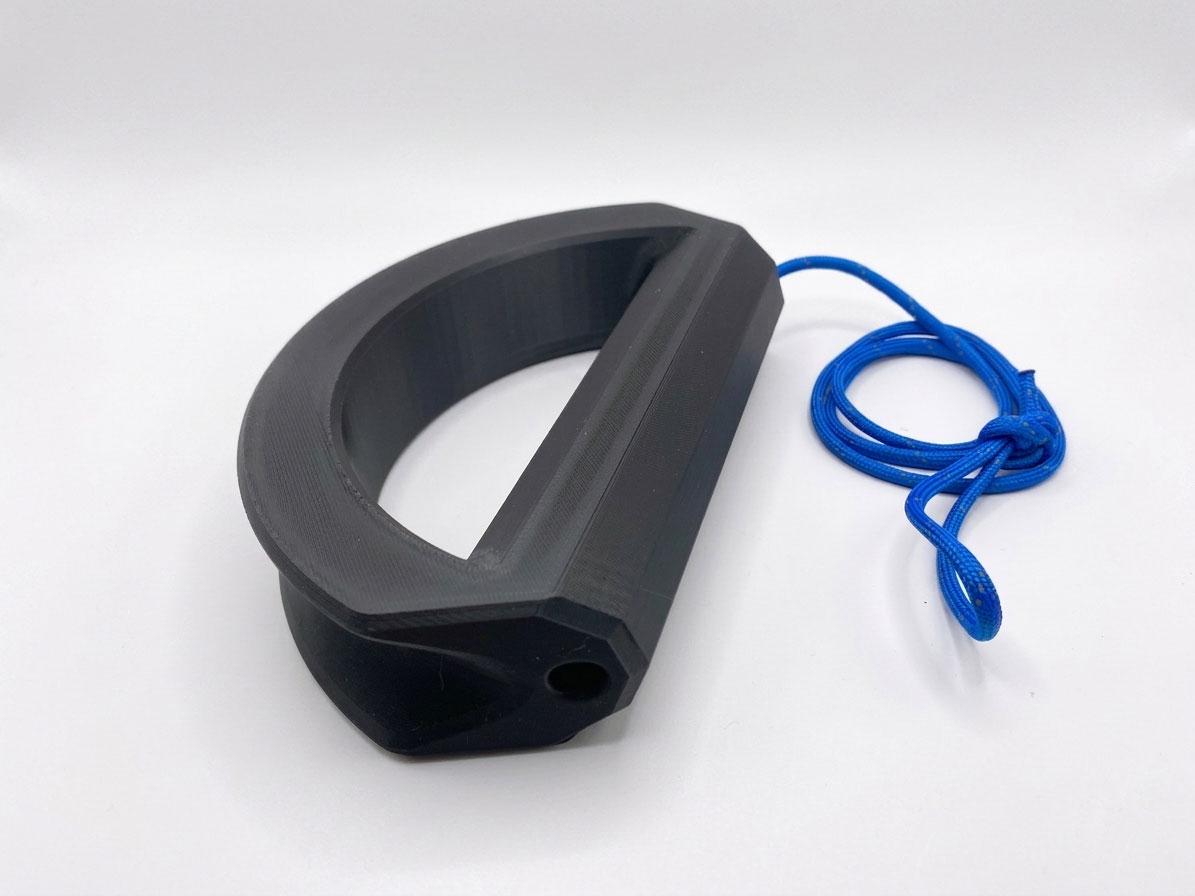
Hold the tool with elbow bent at 90°, tucked at your side. Slowly rotate your forearm so your palm faces down (pronation), then control the return to palm-up (supination). Keep movements smooth—no jerking or swinging. Aim for 3 sets of 10-12 controlled reps.
Can pronation training help with climber's elbow? +
Yes—strengthening the flexor-pronator mass can reduce strain on the medial epicondyle (inner elbow), a common site of overuse pain in climbers. Safety note: If you currently have elbow pain, consult a climbing-specialized PT before starting. Begin with isometric holds (no rotation) at light load, then progress to slow eccentrics. Never train through sharp or worsening pain—this can aggravate tendonitis.
What resistance should I start with? +
Begin with less than 5 lbs of resistance. Master 3 sets of 10-12 slow, controlled reps with perfect form before adding weight via loading pin. Safety note: Adding resistance too soon is the #1 cause of wrist/elbow strain with pronation tools. If your forearm shakes excessively or form breaks down, deload immediately. Progress weight only when you can complete all reps with zero pain.
How often should I train pronation? +
2-3x/week maximum, with at least 48 hours rest between sessions. Pair pronation work with supination/extensor exercises to maintain muscular balance. Many athletes integrate it into their warm-up or post-climbing routine.
Will this help me on slopers? +
Yes—stronger wrist stabilizers improve your ability to maintain contact on low-friction holds by reducing the grip force required, which many climbers report translates to better sloper performance after 4-6 weeks. Combine tool work with actual sloper climbing for best transfer.
Is pronation training safe if I have a history of wrist injuries? +
Potentially yes—but with caution. Rotational strength work can support rehab for TFCC or ulnar-sided wrist issues when programmed progressively. Safety note: Always get clearance from a climbing PT first. Start with pain-free range of motion only, zero added load, and isometric holds before introducing rotation. Stop immediately if you feel sharp pain, clicking, or instability.