Frequently Asked Questions
How can I prepare my hands for pocket climbing without getting palm pain? +
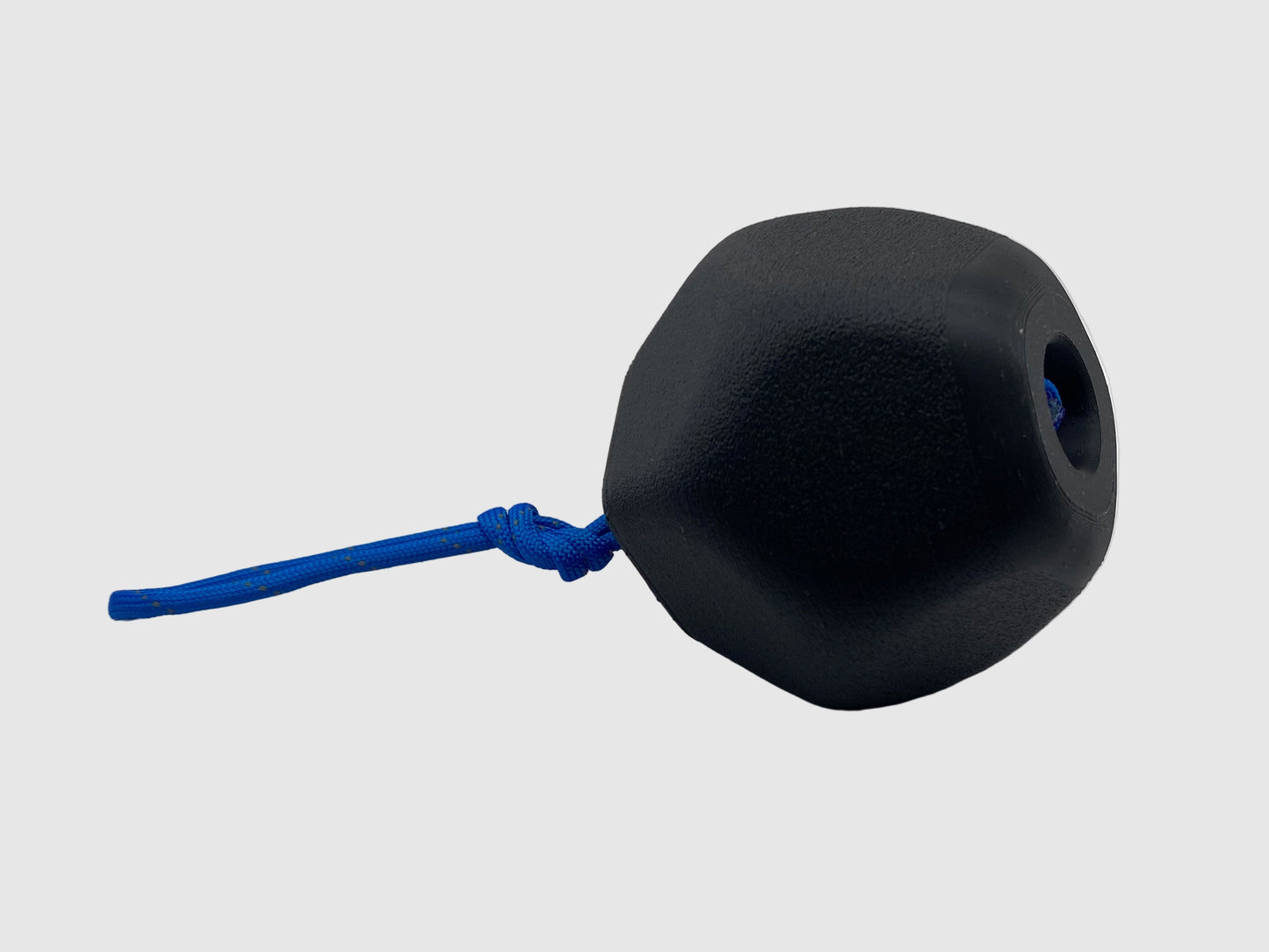
Pocket climbing places unique shear demands on the small stabilizing muscles of the hand — particularly the lumbricals — which standard fingerboard training often misses. The Talon Grip Ball's tapered, pear-shaped profile is designed to safely load these intrinsic muscles through the natural "talon" hand position (fingertips splayed, MCP joints slightly flexed). By gripping the narrower radius with controlled, sub-maximal effort, you can build lumbrical resilience without the high shear forces of actual pocket pulls. Start with 5-8 second holds focusing on smooth force production, not max effort, and progress gradually over weeks. ⚠️ Safety note: If you feel sharp pain at the base of your ring or pinky finger (palm side), stop immediately and consult a climbing-specialized PT. For beginner-friendly protocols, see our Grip Training Guide.
What's the difference between grip balls and hangboards for finger strength? +
Hangboards excel at building max finger strength through static, bodyweight-loaded hangs on fixed edges. The Talon Grip Ball complements this by targeting the intrinsic hand muscles (lumbricals and interossei) through dynamic, multi-plane gripping that mimics real climbing movement. While hangboards load the large forearm flexors, the Talon's tapered, pear-shaped profile lets you isolate lumbrical engagement in open-hand, pinch, and crimp positions—building the fine motor control and joint stability that transfer directly to complex holds like pockets, slopers, and pinches. Use hangboards for raw strength; use the Talon for movement-specific resilience. For programming guidance on combining both tools, see our Grip Training Guide.
Can grip training help with palm pain or prevent lumbrical issues? +
Palm pain during climbing or training can signal overuse of the forearm flexors or strain in the small intrinsic hand muscles like the lumbricals. The Talon Grip Ball's tapered, pear-shaped profile is designed to safely load these intrinsic muscles through the natural "talon" hand position, helping build resilience without the high shear forces that contribute to palm discomfort. By focusing on controlled, sub-maximal squeezes with even pressure distribution, you can strengthen the lumbricals and interossei while reducing compensatory forearm tension. ⚠️ Safety note: If you're experiencing persistent palm pain, sharp pain at the base of your ring or pinky finger, or numbness/tingling, stop training and consult a climbing-specialized PT before continuing. For guidance on identifying pain sources and safe progression, see our Grip Training Guide.
How do I know if I'm engaging my intrinsic hand muscles vs. just gripping with my forearm? +
Many climbers default to forearm-dominant gripping, which can lead to early pump and missed strength gains in the small stabilizing muscles. The Talon Grip Ball's tapered, pear-shaped profile provides tactile feedback to help you isolate intrinsic engagement: when you grip the narrower radius with fingertips splayed (the "talon" position), you should feel subtle activation at the base of your fingers in the palm—not just tension in your forearm. Start with light, slow squeezes focusing on smooth force production from the palm outward. If your forearm fatigues before your hand feels "worked," reduce load and prioritize form. Over time, this builds the lumbrical and interossei strength that supports precise control on complex holds. For drills to develop intrinsic awareness, see our Grip Training Guide.
How often should I train with a grip ball like the Talon? +
Frequency depends on your training phase and recovery capacity. For most climbers, 2x/week of dedicated Talon Grip Ball work (with 48+ hours between sessions) provides sufficient stimulus for intrinsic hand strength without compromising climbing performance. During high-volume climbing blocks, reduce to 1x/week or use the Talon for active recovery with very light, blood-flow-focused squeezes. Track progress by noting improvements in control on complex holds—not just max load. For periodization templates that integrate grip ball work with climbing cycles, see our Grip Training Guide.
How do I progress load with the Talon Grip Ball when there's no standard measurement? +
Progression with the Talon Grip Ball isn't just about adding weight—it's about layering variables. Start by mastering perfect form with light loads (or just the ball's own resistance), focusing on smooth force production and lumbrical engagement. Then progress through: (1) increased time under tension (5s → 8s → 10s holds), (2) reduced rest between reps, (3) more challenging grip positions (wider → narrower radius), and (4) added weight via the integrated loading pin. Track progress by noting improvements in control on complex climbing holds—not just max load. For periodization templates and progression benchmarks, see our Grip Training Guide.