Skip to product information
1 of 4

Macro & Micro Progression Edges

Macro & Micro Progression Edges

Regular price $12.00
Regular price Sale price $12.00
Sale Sold out

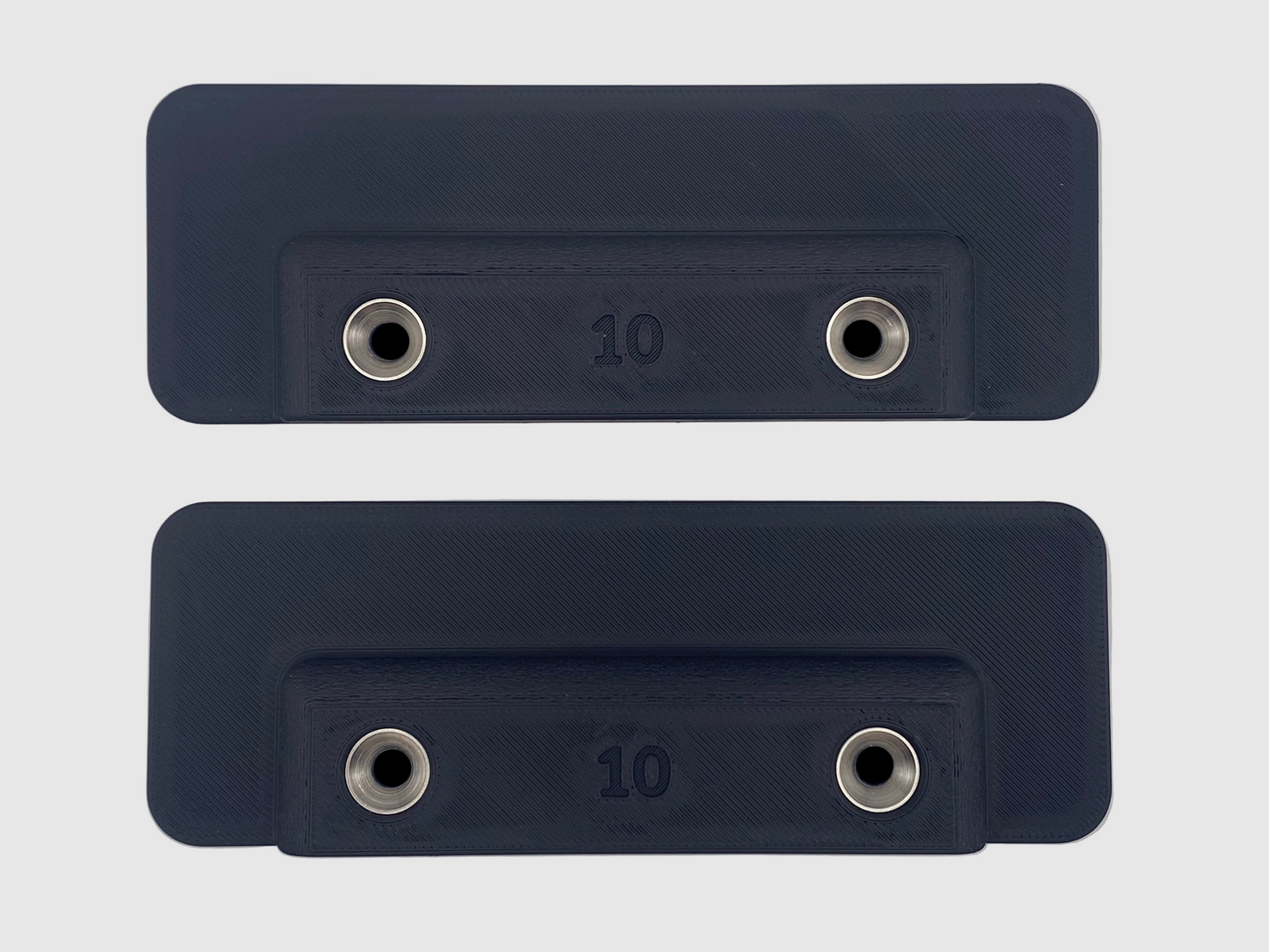
Pair of edges ranging from 22mm all the way down to 5mm. Edges come with radius that matches their size and fine texture for maximized comfort. Choose the depth that best suits your needs, morphology and training style.

Unique backboard encompasses grip area to make sure you get the perfect experience behind the grip surface which avoids stray screw holds and wall irregularities. 

These are great for max effort hang training, for open hand and 1 armed grip training. Designed in a way to allow thumb engagement if wanted. Why not!

Small footprint allows extensibility to your current edge hanging setup.

Micros come in half sizes for those looking to make gains in small edge hangs and want to ease in.

Comes in matching pair.

Additional Edge Details

  • Product Dimensions: (W) 140mm x (H) 50mm
  • Required Hardware: Four (4) 2inch - T25 #10 Wood Screws
View full details

Frequently Asked Questions

What are Progression Edges and how are they different from other training edges? +
Progression Edges are a matched pair of training edges designed for systematic finger-strength development—from 22mm macro edges down to 5mm micros. Unlike single-depth edges, this set lets you progress incrementally without changing hardware. Each edge features a radius that scales with its depth for consistent comfort, plus a fine texture for reliable grip. The integrated backboard ensures uniform mounting regardless of wall irregularities, so your grip experience stays consistent across all depths.
What edge depths are included and who are they best for? +
The set includes edges from 22mm down to 5mm, with half-size micros (e.g., 9.5mm) for smooth progression on tiny holds. Ideal for intermediate to advanced climbers building max finger strength, boulderers training for crimpy problems, or anyone using a structured hangboard protocol. Beginners can start on the 22mm or 20mm edges and progress downward as strength improves. For guidance on matching edge depth to your training phase, see our Edge Depth Guide.
How do I install and mount the Progression Edges? +
Each edge requires four (4) 2-inch #10 wood screws with T25 drive for secure mounting. The integrated backboard ensures consistent spacing and alignment regardless of wall texture or stud placement. Mount at a height that allows full arm extension during hangs, with enough clearance below for controlled lowering. For best results, mount on solid wood or use appropriate anchors for drywall. Always test mounting security before loading with bodyweight.
How do I train with Progression Edges for max strength gains? +
Use Progression Edges for max-effort hangs (5-10 seconds) with 2-3 minutes rest between sets. Start on a depth you can hold with perfect open-hand form, then progress to smaller edges only when you can complete all reps pain-free. The matched-pair design supports one-arm training and thumb-assisted grips for sport-specific adaptation. Track progress by noting which depth you can hold for target duration—not just adding weight. For detailed protocols matched to your goals, see our Finger Training Guide.
Can Progression Edges be used for rehab or injury prevention? +
Yes—with proper progression. The scaled-depth design lets you reintroduce load gradually during tendon rehab, starting on larger edges (22mm+) and progressing downward only when pain-free. The radius-matched edges reduce skin drag and promote natural fingertip alignment. ⚠️ Safety note: Always get clearance from a climbing-specialized PT before starting rehab training. Begin with sub-maximal, isometric holds only. Progress gradually and stop immediately if you feel sharp pain, joint tenderness, or increased swelling.
Can I use Progression Edges for one-arm or thumb-assisted training? +
Yes—the compact 140mm width and integrated backboard support one-arm hangs and thumb-assisted grips for sport-specific adaptation. The fine texture provides reliable friction for open-hand or half-crimp positions. Start with larger edges and lighter loads when introducing one-arm work, focusing on controlled movement and perfect form. Progress to smaller depths only when you can maintain stability without compensatory shoulder or elbow strain.