Frequently Asked Questions
What is an inch pinch block and how does it actually work? +
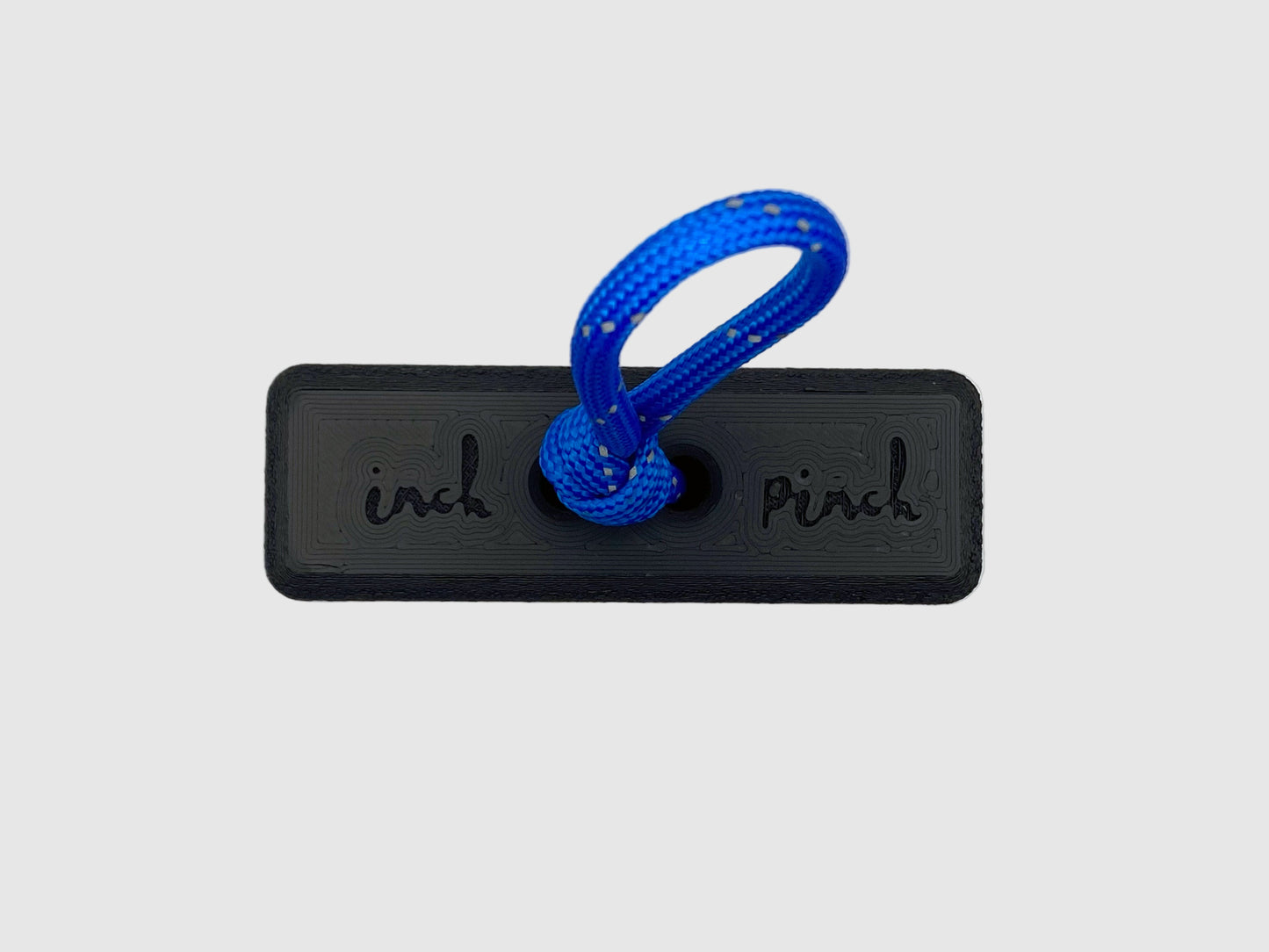
An inch pinch block is a simple but powerful training tool that isolates and strengthens your pinch grip — the strength you use when pinching holds between your thumb and fingers. Here's how it works: 1. Attach weight: Clip a weight plate or dumbbell to the block using a carabiner and rope/cord. 2. Pinch the block: Grab the block between your thumb and four fingers, like you're pinching a climbing hold. The "inch" refers to the thickness — about 1 inch wide. 3. Lift and hold: Stand up with the weight off the ground and hold it for a set time (usually 5-10 seconds). Keep your arm straight and lift with your legs, not your back. 4. Release and reset: Lower the weight back down, rest, then repeat. Why it works: When you pinch the block, your thumb has to work against your fingers to keep it from slipping. This trains the exact muscles and movement pattern you use on pinch holds while climbing. Unlike hanging on a hangboard (which trains finger flexors), the pinch block specifically targets thumb strength and the compression grip. Inch pinch vs. wide pinch — what's the difference?: Inch Pinch (Narrow): Thumb demand: Very high — thumb works harder to compress the narrow block; Finger involvement: Less finger strength, more pure thumb opposition; Climbing transfer: Best for small pinches, crimps with thumb, and thumb-dependent moves; Difficulty: Harder per pound — the narrow width makes it slip easier; Best for: Building raw thumb strength and pinch-specific power. Wide Pinch: Thumb demand: Moderate — thumb still engaged, but fingers share more of the load; Finger involvement: More finger flexor engagement along with thumb; Climbing transfer: Best for wide pinches, slopers with thumb, and compression holds; Difficulty: Easier per pound — wider surface area gives more friction; Best for: Building general pinch endurance and grip stability. Simple way to think about it: Inch pinch = like pinching a small edge with your thumb — pure thumb strength, high difficulty; Wide pinch = like holding a wide jug with your thumb on the side — more finger help, more friction. Why start with inch pinch: Most climbers have weaker thumb strength than finger strength. The inch pinch exposes this weakness directly and forces your thumb to catch up. Once your thumb is strong on the inch pinch, wider pinches feel much easier. Quick tip: Start with light weight (even just 5-10 lbs) to learn the proper pinch position. Focus on using your fingertips and thumb pads — not gripping deep in your hand. Chalk up before each attempt to prevent slipping.
Why should I train pinch grip separately when I can just climb more? +
Training pinch grip with a block is more effective than just climbing because it isolates the exact muscles you need for pinches — and removes the ability to compensate with other muscles. Here's the problem with only climbing for pinch strength: When you're on the wall pinching a hold, your body naturally recruits bigger muscles (arms, back, shoulders) to help when your small grip muscles start to fail. This means your grip never gets fully trained — you're always "cheating" a little by using other muscles. How the pinch block fixes this: No compensation: When you're holding a pinch block with one hand, there's nothing else to use. Your thumb and fingers either hold it, or they don't. This forces your grip muscles to adapt and get stronger. Measurable progress: You can track exact weights and times. If you pinched 20 lbs for 7 seconds last week and 25 lbs this week, you know you're getting stronger. On the wall, progress is harder to measure. Targets weak points: Most climbers have weaker pinch grip than open-hand or crimp grip. The pinch block lets you specifically train this weakness without waiting for pinch-heavy climbs to show up in your rotation. What actually gets stronger: Thumb opposition strength (your thumb pushing against your fingers); Forearm muscles that control pinch; Small hand muscles that stabilize the grip; Neural recruitment (your brain learning to fire these muscles more effectively). Simple way to think about it: Climbing for pinch strength is like doing full body workouts and hoping your grip improves. Pinch block training is like doing targeted bicep curls — you're directly working the specific muscles you want to grow. Quick tip: Train pinch blocks 2-3 times per week with rest days between sessions. Your grip will adapt faster than you think, and you'll notice the difference on pinch-heavy climbs within a few weeks.
How do I know if I'm pinching the block correctly? +
Proper pinch block technique is specific — and getting it right matters for both effectiveness and safety. What correct form looks like: Fingertip contact: The block should rest against the pads/tips of your fingers and thumb — not deep in your palm. This engages the small muscles that actually matter for climbing pinches. Thumb opposition: Your thumb should be actively pressing against your fingers, creating compression. You should feel your thumb working, not just hanging there. Straight arm: Your arm should be fully extended (not bent) when holding the weight. This isolates the grip — if your arm is bent, your biceps are helping. Engaged shoulder: Keep your shoulder "active" (slightly pulled down and back, like you're starting a pull-up). This protects your shoulder joint and keeps your torso stable. Upright torso: Stand tall with your chest up. Don't lean forward or twist to compensate. Common mistakes to avoid: Gripping too deep: If the block is resting in your palm instead of on your fingertips, you're not training the right muscles. Bent wrist: Your wrist should stay neutral (straight), not bent forward or backward. Letting it slip: If the block is sliding in your hand, either use chalk or reduce the weight. Slipping means you're losing tension. Holding too long or too short: Aim for 5-10 seconds. Less than 5 seconds = too heavy. More than 12 seconds = too light. Simple self-check: After each hold, ask yourself: - Did I feel it in my thumb and fingertips? ✓ - Did my arm stay straight? ✓ - Did the block stay secure (no slipping)? ✓ If yes to all three, you're doing it right. Quick tip: Use chalk before every attempt. Pinch grip is highly friction-dependent, and sweaty hands will slip no matter how strong you are. Keep a chalk bag nearby and reapply between sets.
How much weight should I start with on a pinch block? +
Starting weight on a pinch block is highly individual — but there's a simple way to find your starting point without guessing. The "test and adjust" method: 1. Start light: Begin with 5-10 lbs total (just the block + a small plate). Yes, even if you're strong — pinch grip is specific and often weaker than you expect. 2. Test your hold: Pinch the block with one hand, lift it off the ground with a straight arm, and hold for 5-10 seconds. 3. Check your form: ✓ Did the block stay secure (no slipping)? ✓ Did you feel it in your thumb/fingertips (not your palm)? ✓ Could you keep your arm straight and wrist neutral? 4. Adjust based on results: • If you couldn't hold 5 seconds → reduce weight • If you held 10+ seconds easily → add 2.5-5 lbs next set • If it slipped or hurt → chalk up or reduce weight. Why starting light matters: Pinch grip uses small, specific muscles that don't get trained by most climbing. If you start too heavy, you'll either: - Compensate with bad form (bent arm, bent wrist), which trains the wrong pattern - Slip and drop the weight, which is frustrating and potentially unsafe - Overload your thumb tendons before they're ready, which risks injury. Simple progression guideline: Once you can hold a weight for 3 sets of 10 seconds with perfect form, add 2.5-5 lbs. Small, consistent increases beat big jumps. Quick tip: Train both hands equally, even if one feels stronger. Imbalances in pinch strength can lead to technique quirks or injury on the wall.