Frequently Asked Questions
How does the Fatty Rolling Handle actually work? +
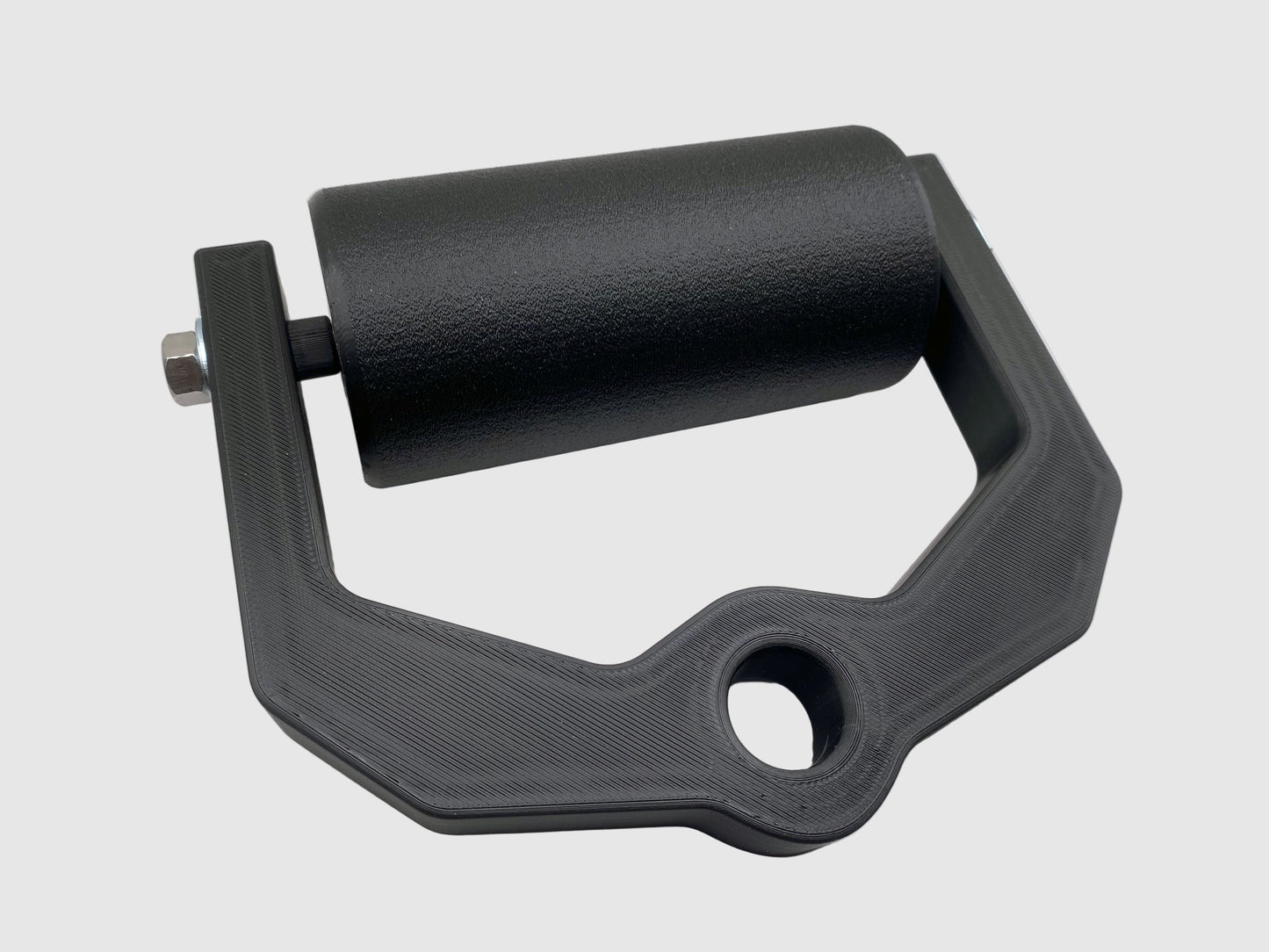
The Fatty Rolling Handle works by rotating freely as you pull or hold it — so your hand has to maintain grip while the handle turns, instead of locking in place like a fixed bar. Here's how it works in practice: 1. Set it up: Slide weight plates onto the built-in loading pin, or attach the handle to a pulley system with a rope/cable. 2. Grip it: Wrap your hand around the thick cylinder (50mm, 60mm, or 70mm). No special grip needed — just hold it like you would any handle. 3. Apply force: When you pull or hold weight, the handle wants to roll/spin in your hand because it rotates freely around its axis. 4. Control the roll: Your grip has to do two things at once: (a) keep the handle from slipping out of your hand, and (b) keep your wrist stable while the handle rotates. Why this matters: Because the handle moves, your wrist and forearm can't just lock in one position. They have to constantly adjust — which trains a smarter, more functional kind of strength. The rotation also shifts emphasis away from pure finger squeezing and toward wrist stability and forearm control. Simple comparison: Lifting with a fixed bar is like holding a door handle that doesn't move. Lifting with the Rolling Handle is like holding one that spins — your hand has to work harder just to keep control. Quick tip: Start with light weight (or just the handle alone) to feel how the roll works. Focus on smooth control, not max load. Once the movement feels natural, you can add weight or slow the roll to increase difficulty.
Why does the handle rolling make it harder than a fixed handle? +
The Fatty Rolling Handle is harder than a fixed handle because of one simple thing: it moves while you're using it. Here's what changes when the handle rolls: Your grip can't relax: On a fixed handle, once you grab it, your fingers can settle into a static hold. On the Rolling Handle, the rotation means your grip has to constantly readjust to keep the handle from slipping. Your wrist stays active: A fixed handle lets your wrist lock in one position. The Rolling Handle forces your wrist to stabilize while the load shifts — like holding a cup of water while walking vs. holding it still. Your forearm works smarter: Because the handle rotates, your forearm muscles can't just "pull hard" in one direction. They have to coordinate to control both the weight AND the rolling motion. Simple mechanics breakdown: 1. You pull or hold weight attached to the handle; 2. The handle rotates freely around its axis; 3. Your hand must prevent slippage WHILE keeping your wrist aligned; 4. This dual demand (grip + stabilization) creates a harder, more functional challenge. Why this feels different: It's not just "more weight" — it's a different kind of work. A fixed handle tests how hard you can squeeze. The Rolling Handle tests how well you can control your hand and wrist while things move. Quick tip: If the roll feels too wild at first, start with lighter weight and focus on keeping the handle from spinning too fast. As your control improves, you can let it roll more freely or add weight. The challenge scales with your skill.
How does handle thickness (50mm, 60mm, 70mm) change how the device works? +
The thickness of the Fatty Rolling Handle changes the mechanics of how it rolls in your hand — not just how hard it feels. Here's how diameter changes the experience: 50mm: Smaller circumference = easier for your hand to wrap around. The handle rolls smoothly with less "wobble." Your fingers stay more relaxed, so your wrist and forearm do more of the stabilizing work. Great for learning the rolling motion. 60mm: Medium circumference = your fingers open a bit wider to grip. The handle has more leverage to rotate, so it creates a stronger rolling pull that your wrist has to control. This is where the device's unique challenge really shows up. 70mm: Larger circumference = your hand has to stretch to close around it. The handle's rotation creates maximum leverage, so even light weight feels heavier because your grip has to work harder just to keep control. Best once you've mastered the movement. The mechanical reason: Thicker handles increase the distance between your hand's grip point and the handle's center of rotation. This creates more rotational force for the same amount of weight — so your grip and wrist have to work harder to control the roll. Simple way to think about it: Thin handle = easier to hold, smoother roll, focuses on wrist control; Thick handle = harder to hold, stronger roll, challenges grip + wrist together. Quick tip: Start with 50mm or 60mm to learn how the rolling mechanics feel. Once you can control the roll smoothly, try 70mm to add the grip challenge. The device works best when you can focus on the movement pattern, not just fighting to hold on.
What should I actually feel when using the Rolling Handle? +
When you use the Fatty Rolling Handle correctly, you'll feel a few specific things — and knowing what to expect helps you confirm you're using it right. What you SHOULD feel: In your grip: A gentle, constant engagement as your fingers adjust to keep the handle from slipping. Not a max-effort squeeze — just enough to guide the roll. In your wrist: A subtle "working" sensation around the wrist joint itself, like it's staying steady while the handle rotates. Not pain, not sharp tension — just active stabilization. In your forearm: A deep, spreading fatigue (not a sharp burn) as your forearm muscles coordinate to control both the weight AND the rolling motion. During the roll: A smooth, controlled sensation — like you're steering the handle, not just holding on. If it feels jerky or wild, the weight is probably too heavy or your grip is too tight. What you should NOT feel: Sharp pain in your wrist, palm, or fingers — stop immediately if this happens; Numbness or tingling — this means your grip is too tight or your wrist is bent awkwardly; Forearm cramping within the first few reps — this usually means you're squeezing too hard instead of guiding the roll; Elbow strain — if your elbow aches, your wrist may be compensating; reduce weight and focus on keeping your wrist straight. Simple self-check: After a set, ask yourself: ✓ Did the handle roll smoothly, or did it jerk/spin out of control? ✓ Did my wrist stay mostly straight, or did it bend as the handle moved? ✓ Did I feel the work in my wrist/forearm, or just in my fingers? If you answered "smoothly," "straight," and "wrist/forearm" — you're using it right. Quick tip: Start with just the handle (no extra weight) to learn what the correct sensation feels like. Once you can recognize the "right" feeling, you can safely add weight or slow the roll to increase difficulty.