Skip to product information
1 of 2

2 Inch Parallettes

2 Inch Parallettes

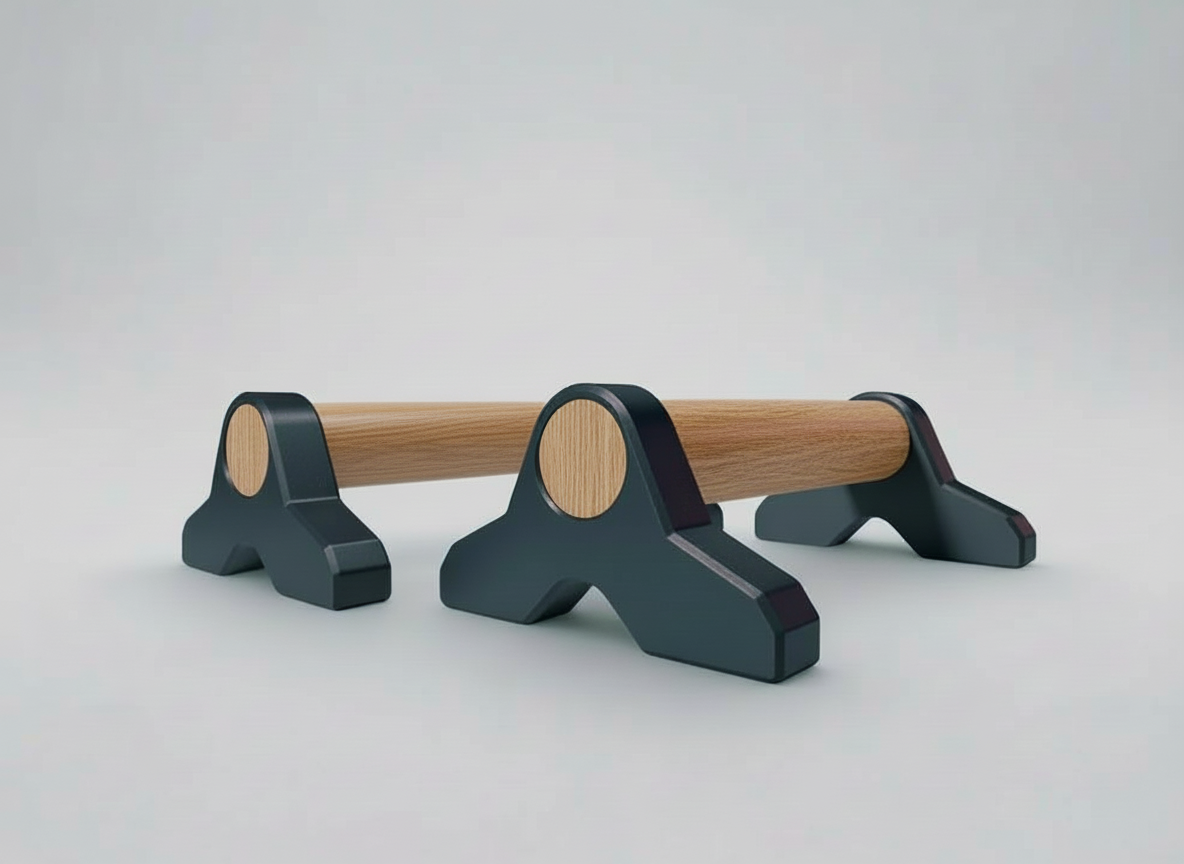
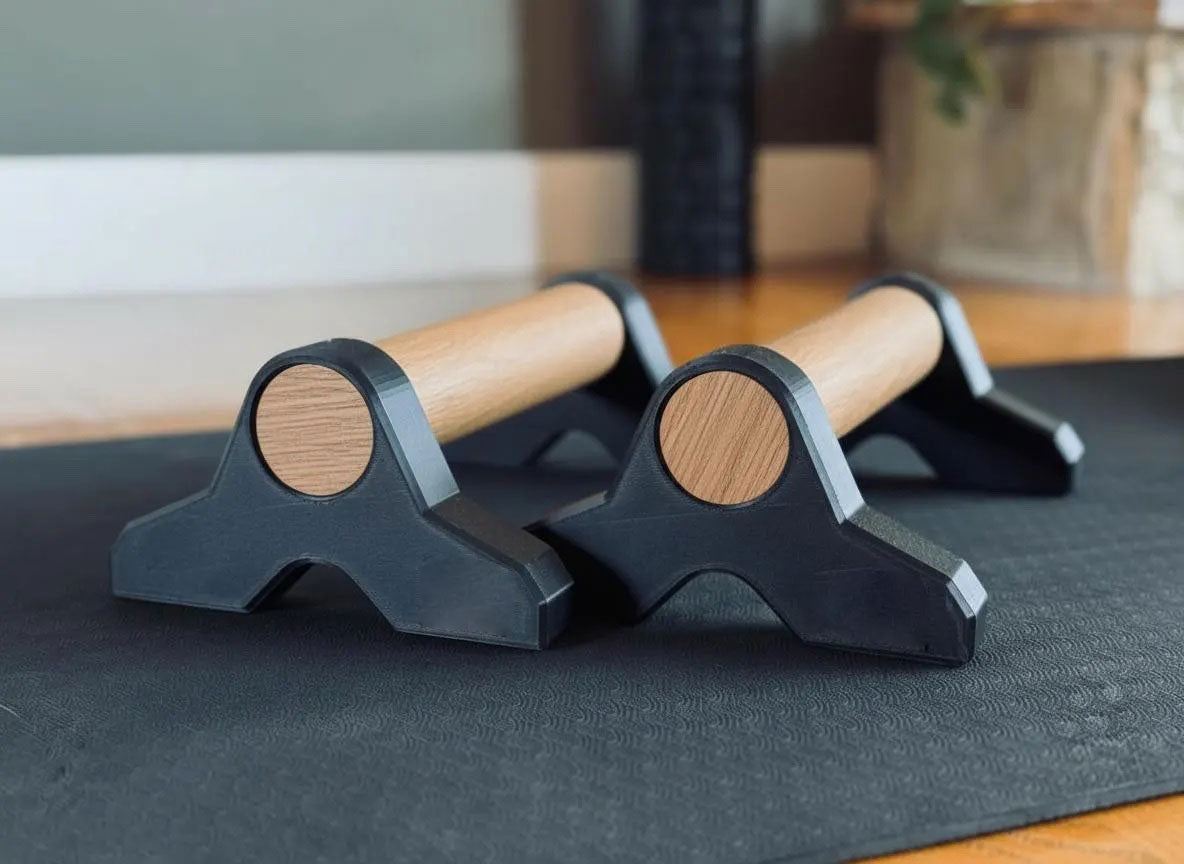
Thick wooden parallettes designed with climbers in mind. Originally built for calisthenics and bodyweight training, these 2 in (50mm) diameter bars increase your range of motion for planche work, L-sits, and push-ups, and are excellent for upper-body antagonist training for climbing.

Each pair combines smooth wooden bars with black bases to deliver a lightweight yet stable feel, and non-slip rubber feet provide secure grip on most surfaces while you move.

Ideal for push, core, and shoulder stability work to balance heavy pulling and finger training.

Dimensions:
Length: 11.5 in
Width: 7.5 in
Height: 4 in

Regular price $37.00
Regular price Sale price $37.00
Sale Sold out
View full details

Frequently Asked Questions

Why use thick-grip parallettes instead of standard thin bars? +
The 2-inch thick handles change how your hands and forearms work during calisthenics exercises — not just how they feel. Here's how the thick grip affects the mechanics: Your grip has to work harder: A 2-inch diameter forces your fingers to open wider to wrap around the bar. This increases grip demand, which builds forearm strength and hand endurance more effectively than thin bars. Your wrists stay more stable: The thicker handle fills your hand more completely, which reduces wobble and creates a more solid connection between your hand and the bar. This stability helps you hold positions like L-sits or handstand leans with better control. Your forearms get extra training: Because your grip is working harder to hold the thick bar, your forearm muscles are engaged throughout the entire movement — not just at the end when you're fatigued. Simple comparison: Holding a thin bar is like gripping a pencil — easy to hold, but your hand doesn't have to work hard. Holding a 2-inch thick bar is like gripping a soda can — your hand has to actively wrap and stabilize, which trains grip strength as a bonus to the main exercise. Why this matters for calisthenics: Many calisthenics skills (L-sits, planche leans, handstands) require you to hold your bodyweight for time. If your grip fades first, you can't train the skill long enough to improve. Thick-grip parallettes build that grip endurance so your hands don't quit before your core or shoulders do. Quick tip: If the 2-inch grip feels challenging at first, that's normal. Start with shorter holds (10-15 seconds) and focus on keeping your wrists straight and your grip relaxed but secure. As your hands adapt, you'll notice better control on all your parallette exercises.
How does the 2-inch thick handle affect exercises like L-sits or handstand push-ups? +
The 2-inch thick handle changes the feel and demand of calisthenics exercises in subtle but meaningful ways. For L-sits and V-sits: The thick grip requires your fingers to actively hold the bar, which engages your forearms more than just resting your palms on thin bars. This extra grip work helps you maintain the position longer because your hands feel more "locked in" to the bar. The comfort-focused design (smooth finish, rounded edges) reduces pressure points on your palms during long holds. For handstand push-ups and presses: A thick handle gives your hand more surface area to press into, which can feel more stable when you're inverted. The extra grip demand means your forearms stay engaged throughout the movement, helping you maintain a solid "shelf" with your shoulders and arms. Because your wrists stay in a neutral, straight position (not bent back), you can train longer without wrist discomfort. For support holds and planche work: The thick grip forces your hands to actively hold the bar, which builds the grip endurance needed for advanced skills. The 4-inch height gives enough clearance for proper range of motion while keeping your center of gravity low for stability. The combination of thick grip + stable base lets you focus on body positioning instead of fighting your equipment. Simple way to think about it: Thin bars = your hands rest on the equipment. Thick bars = your hands actively hold the equipment. That small shift turns every exercise into a grip + strength combo. Quick tip: If you're new to thick-grip training, expect your forearms to fatigue faster at first. That's the adaptation process. Start with lighter progressions (tuck L-sits, partial range push-ups) and let your grip catch up to your strength.
Will thick grips make exercises harder, or just different? +
Thick grips make exercises both harder and different — and that's the point. How the 2-inch handle changes the demand: Grip becomes part of the exercise: On thin bars, your hands can relax once you're in position. On thick grips, your fingers have to actively hold the bar the entire time. This turns grip strength from a side effect into a core part of the movement. Forearms work from start to finish: Because your grip is engaged continuously, your forearm muscles don't get a break — even during "rest" phases of a movement. This builds endurance that transfers to longer holds and higher-rep sets. Wrist stability improves naturally: A thick handle fills your hand more completely, which reduces side-to-side wobble. This creates a more stable base for skills like L-sits or handstand leans, letting you focus on body positioning instead of fighting the bar. What stays the same: The primary muscles targeted (core for L-sits, shoulders for presses, etc.) don't change. The thick grip just adds an extra layer of demand on top of the main movement. Simple way to think about it: Thin bars = your hands are passengers. Thick bars = your hands are co-pilots. Same destination, more engaged journey. Quick tip: If thick grips feel challenging at first, start with shorter sets and focus on keeping your grip relaxed but secure — not death-squeezing the bar. Your hands will adapt faster than you think, and the extra grip strength will pay off across all your calisthenics work.